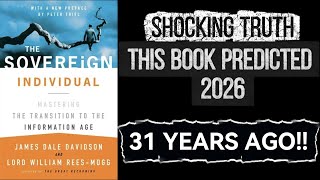
The Sovereign Individual (full title: The Sovereign Individual: Mastering the Transition to the Information Age) is a visionary 1997 book by James Dale Davidson and Lord William Rees-Mogg. It's often described as a prophetic work on how technology—especially the rise of the internet, digital economies, encryption, and cybercurrencies—would fundamentally reshape society, power structures, and individual freedom in the 21st century. The core idea is that humanity is undergoing one of the biggest transformations in history: a shift from the industrial age (dominated by nation-states, welfare systems, and centralized governments) to the information age. The authors argue this change is comparable in scale to major historical revolutions, like the fall of Rome or the gunpowder era, but driven by information technology rather than physical force. Key predictions and themes include: The decline and eventual collapse (or severe weakening) of the traditional nation-state and welfare systems, as governments lose their monopoly on violence and taxation in a borderless digital world.
The rise of the "sovereign individual" — highly skilled, tech-savvy people who can operate globally, protect their wealth with cryptography, and live with unprecedented autonomy, almost like mini-sovereign entities.
A move toward decentralization, self-ownership, digital money (they even discussed ideas that later influenced Bitcoin), and a cybereconomy where individuals are liberated from many government controls.
Increasing inequality in some ways (between the capable "sovereigns" and others), but also new opportunities for prosperity, along with potential social upheaval, violence from those resisting the change, and the fragmentation of societies into smaller entities (like city-states or even individual estates).
The book combines historical analysis (comparing past societal shifts) with bold forecasts about economics, politics, and personal strategy. It's part optimistic manifesto for thriving in a decentralized future and part warning about the turbulent transition. Many people today call it eerily accurate—especially on crypto, remote work, declining trust in institutions, and the empowerment of individuals through tech—while others critique its libertarian outlook or some dystopian elements.
?️ New to streaming or looking to level up? Check out StreamYard and get $10 discount! ?
https://streamyard.com/pal/d/6744009683894272





 Sign in to UFO Slice

